
Happenings
-
Women House pays tribute to Womanhouse, the groundbreaking feminist exhibition that redefined the relationship between art, space, and lived experience. Conceived 52 years ago in Los Angeles by Judy Chicago and Miriam Schapiro, the project emerged within the Feminist Art Program at the California Institute of the Arts, a pioneering initiative that helped shape the foundations of feminist art education.
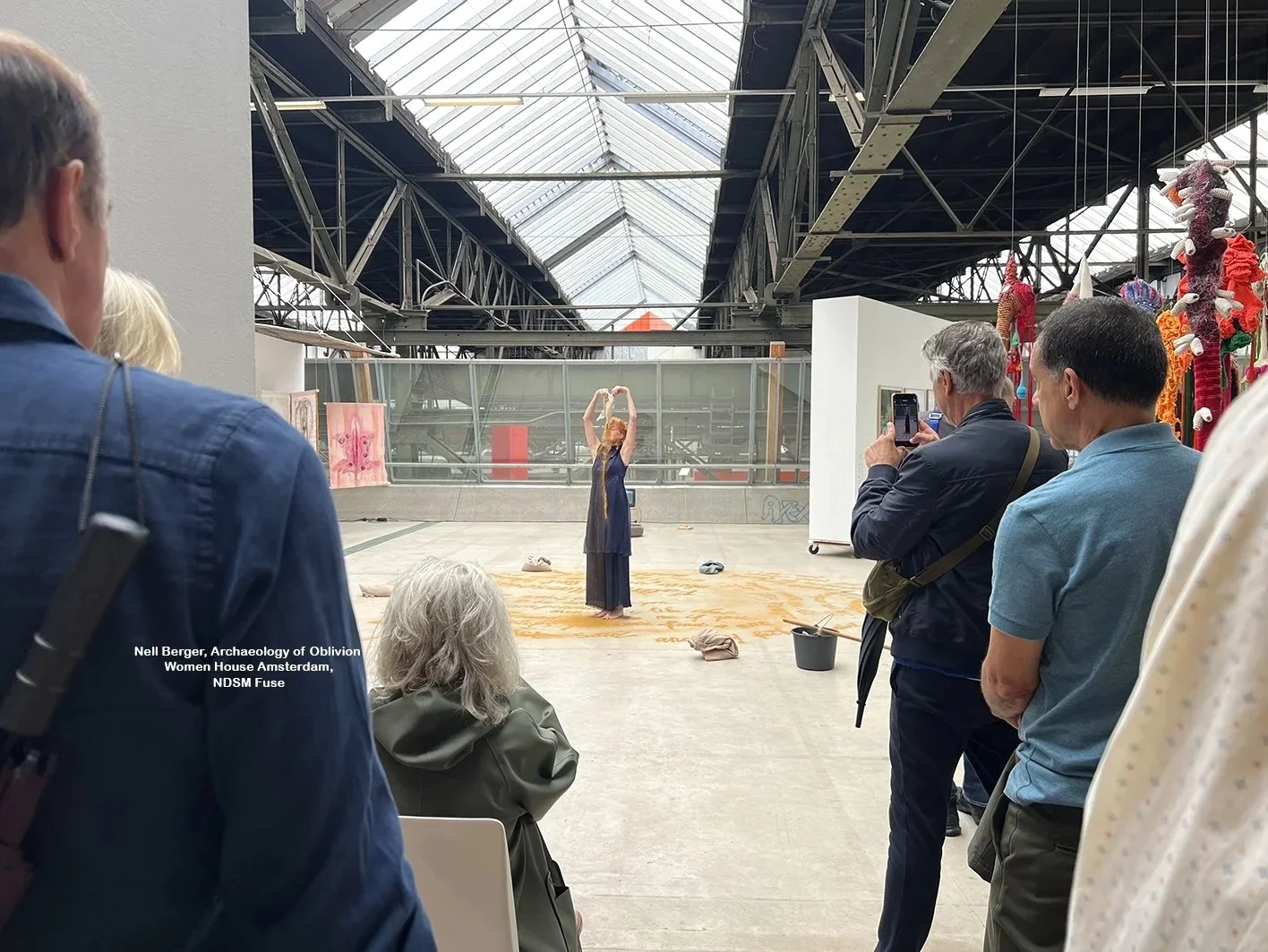
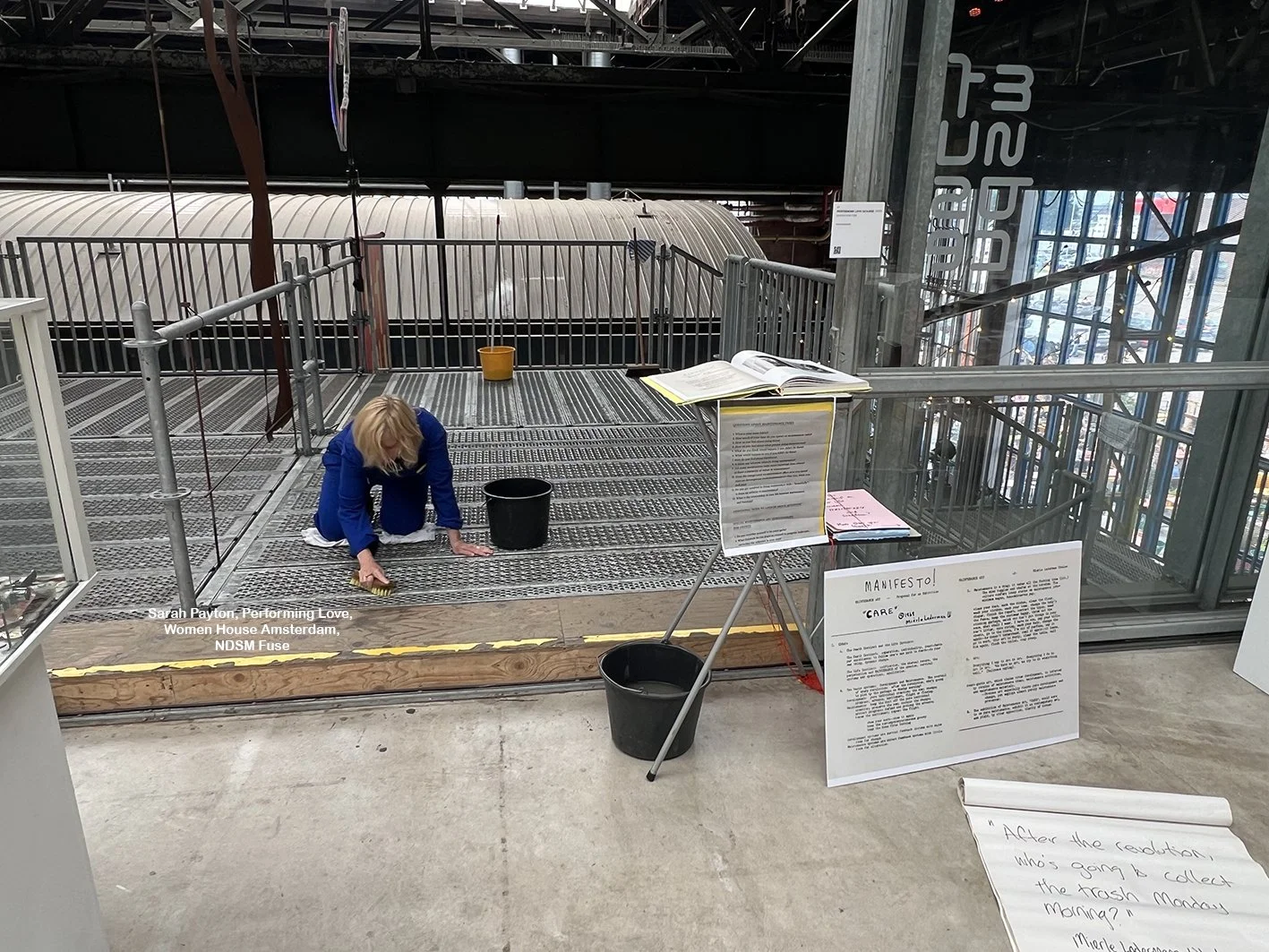
Envisioned as a site-specific installation and performance environment, Womanhouse brought together 23 artists in a radically collaborative experiment. Transforming a domestic space into a critical arena, the exhibition interrogated the cultural construction of femininity and exposed the invisible labor historically assigned to women. Through immersive, themed rooms and live performances where artists enacted everyday tasks such as cleaning, washing, and ironing, the project rendered visible what had long been dismissed as ordinary or insignificant.
At the time, Womanhouse was met with ridicule by a patriarchal press that failed to grasp the depth of its critique. Yet it marked a decisive rupture: elevating domestic experience into a powerful artistic and political language, and challenging entrenched stereotypes about women’s roles within the home. By reframing the house as a site of both oppression and resistance, the project transformed private life into a space of collective questioning and subversion.
Women House revisits this legacy honouring feminist art as an ongoing provocation that continues to resonate in contemporary practices that confront patriarchy and the sexist politics of everyday life.
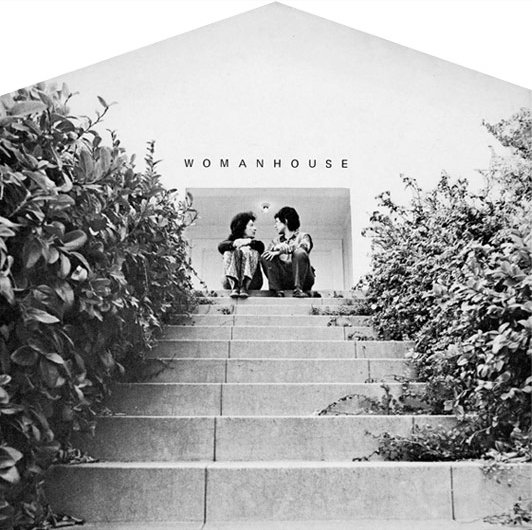
—> Catalog cover featuring Judy Chicago and Miriam Schapiro, credits by Sheila de Bretteville, 1972.
-
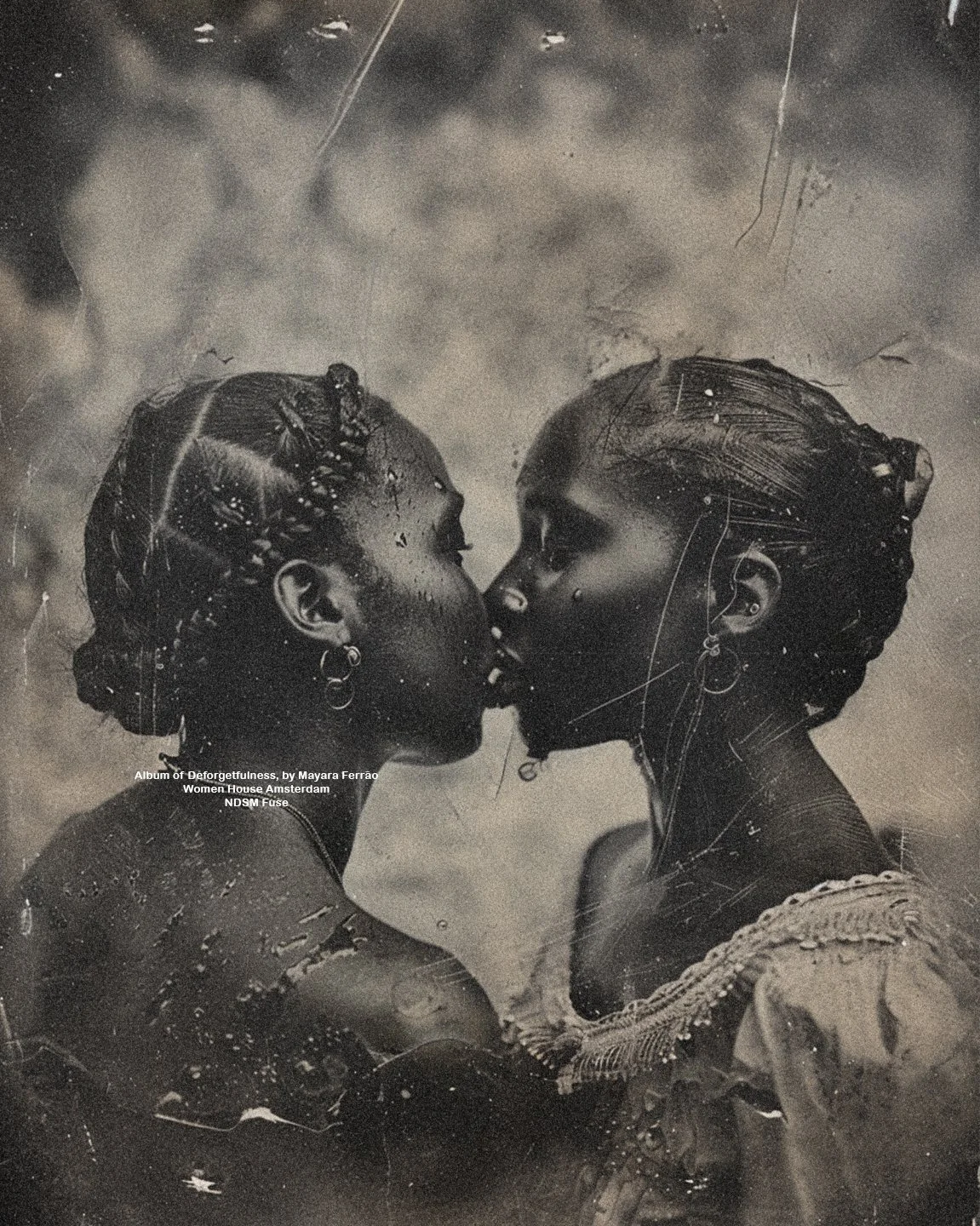
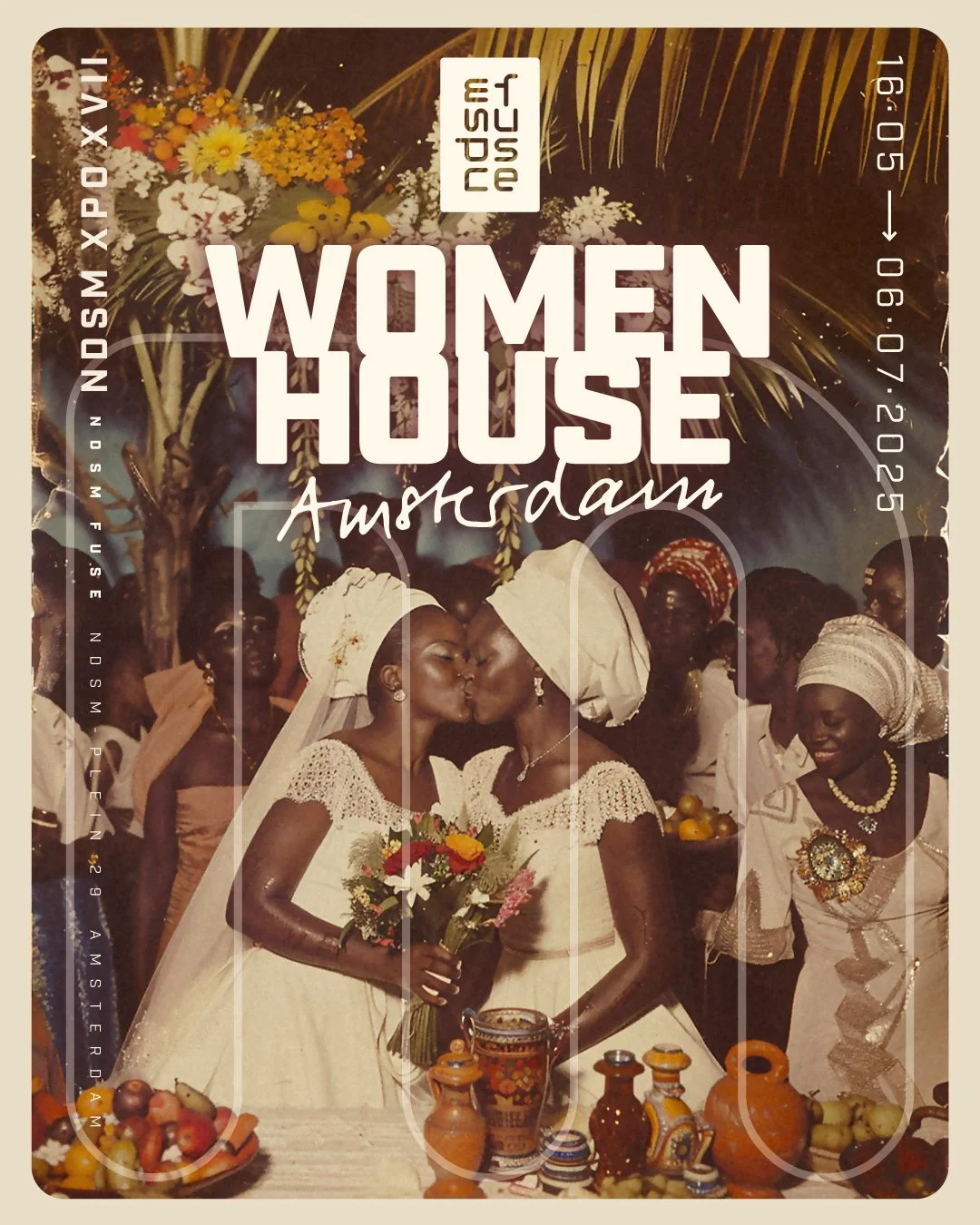
The chosen image for Women House Amsterdam was by Brazilian artist Mayara Ferrão. Album of deforgetfulness unfolds as a visual-poetic act of reparation, confronting the systematic silencing and archival erasure of Black and Indigenous women within Brazil’s colonial record. Rather than seeking to fill what has been lost, the project lingers in the space of irretrievable absence, treating it not as void but as a site of creation. It proposes deforgetfulness as an active, critical practice that resists the violences of forgetting inscribed by colonial historiography.
Through a speculative and intimate repertoire of images, the work fabulates submerged histories of affection, care, and eroticism between women of the past. These gestures operate as necessary imaginaries and counter-archives, unsettling the authority and completeness of official narratives while opening space for other modes of knowing and remembering.
In tracing these fugitive intimacies, the project gestures toward forms of kinship and desire attend to quiet, often invisible networks of solidarity and tenderness that may have existed despite (and in defiance of) colonial structures of domination. By doing so, “Album of deforgetfulness” reclaims fabulation as a form of resistance and a critical strategy: a way of reclaiming what has been denied visibility, while honoring what cannot be fully known.
Ultimately, the artist invites viewers into a participatory act of reimagining history, calling for an engagement with (and a looking beyond) the archive, not as a closed or authoritative system, but as something porous, unstable, and open to collective reconfiguration. Within the space between loss and invention, new possibilities for recognition, connection, and repair begin to take form.
-
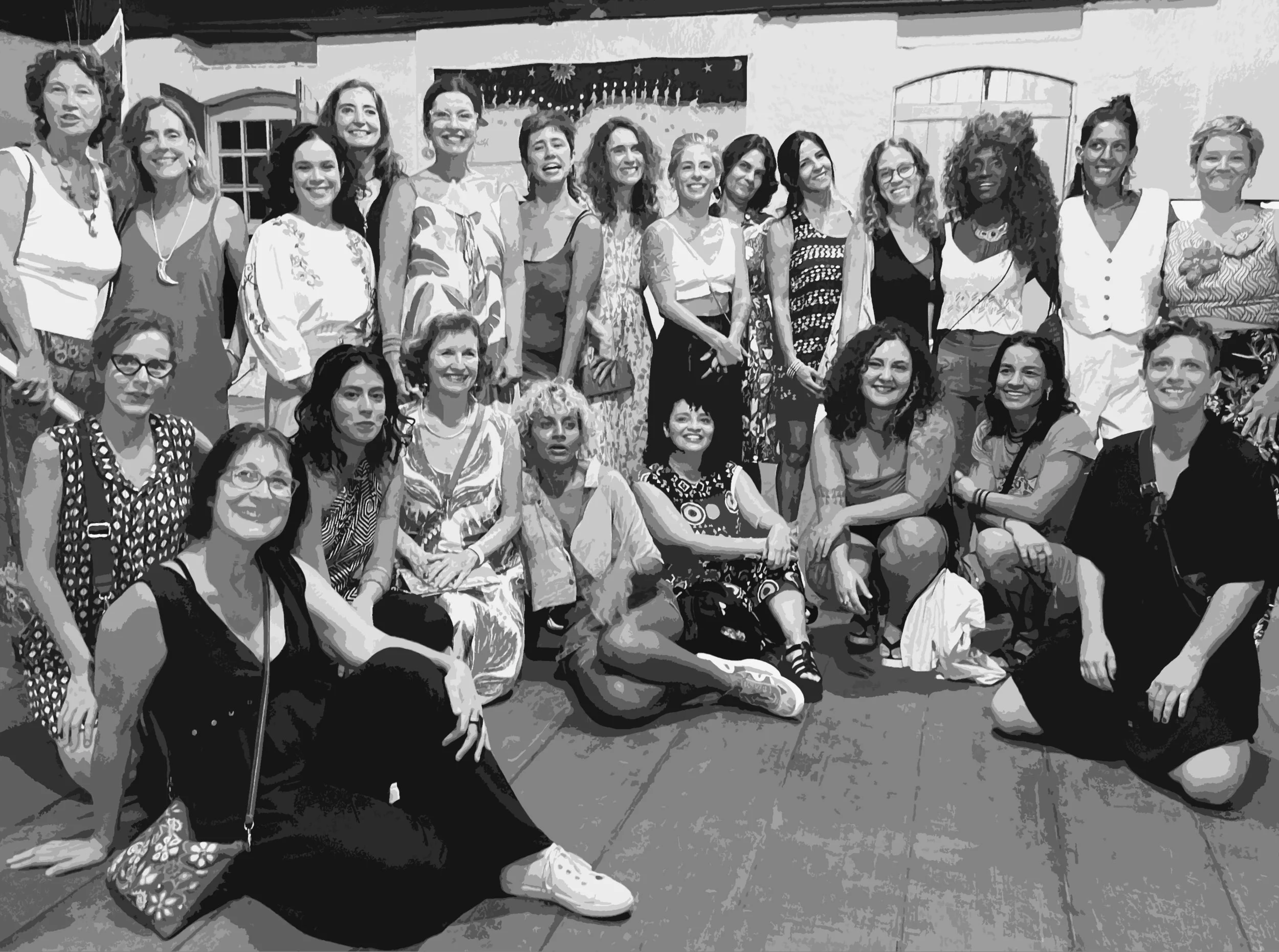
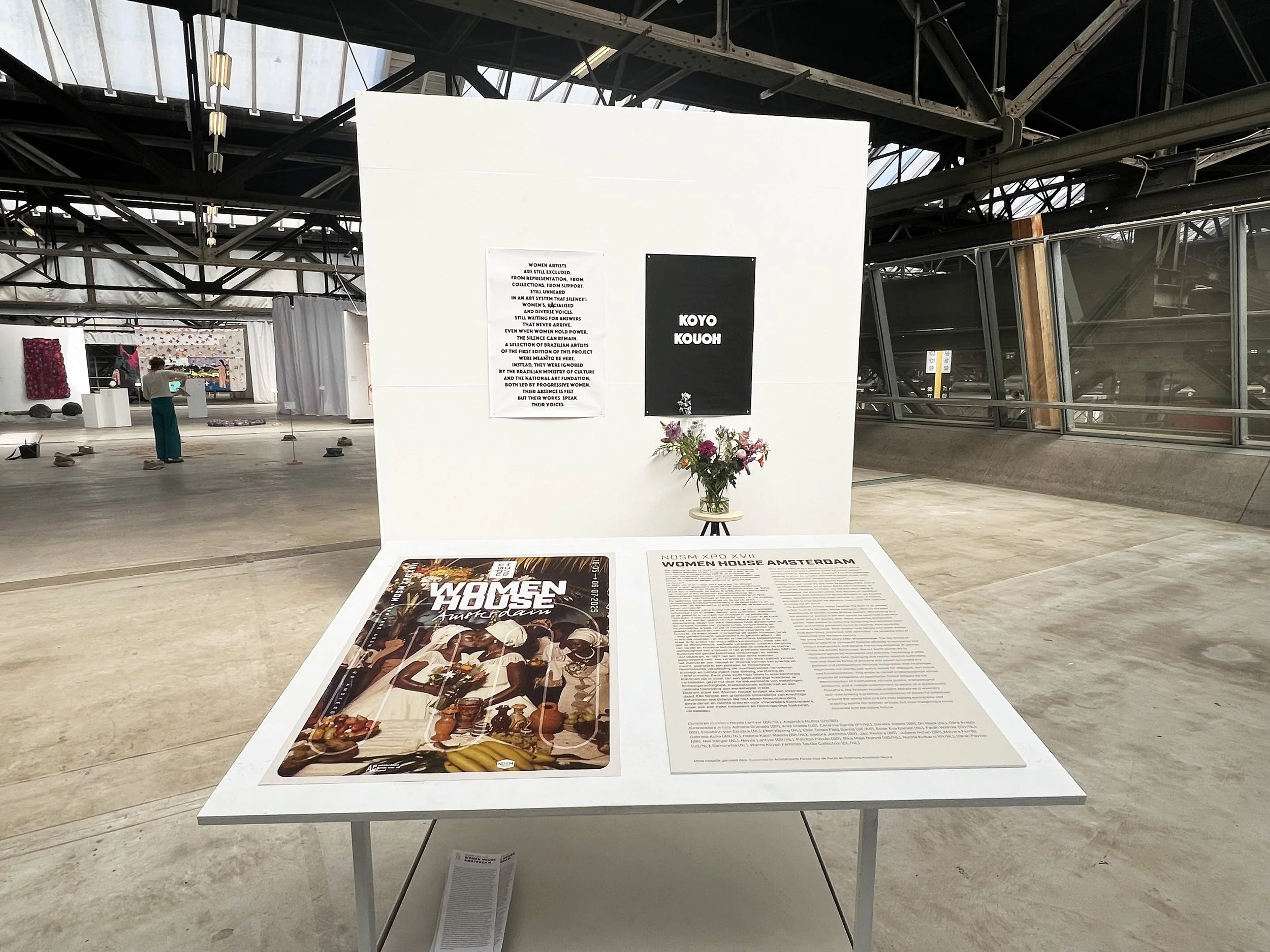
Via an open letter addressed to Brazil’s Ministry of Culture and Funarte, seven Brazilian women artists selected to participate in Women House Amsterdam express deep concern over the unexplained suspension and prolonged lack of communication regarding the cultural mobility grant for which they applied. Their participation in the Netherlands is contingent upon this funding, placing not only their individual artistic presence but also the broader visibility of their collective practice in a state of suspension.
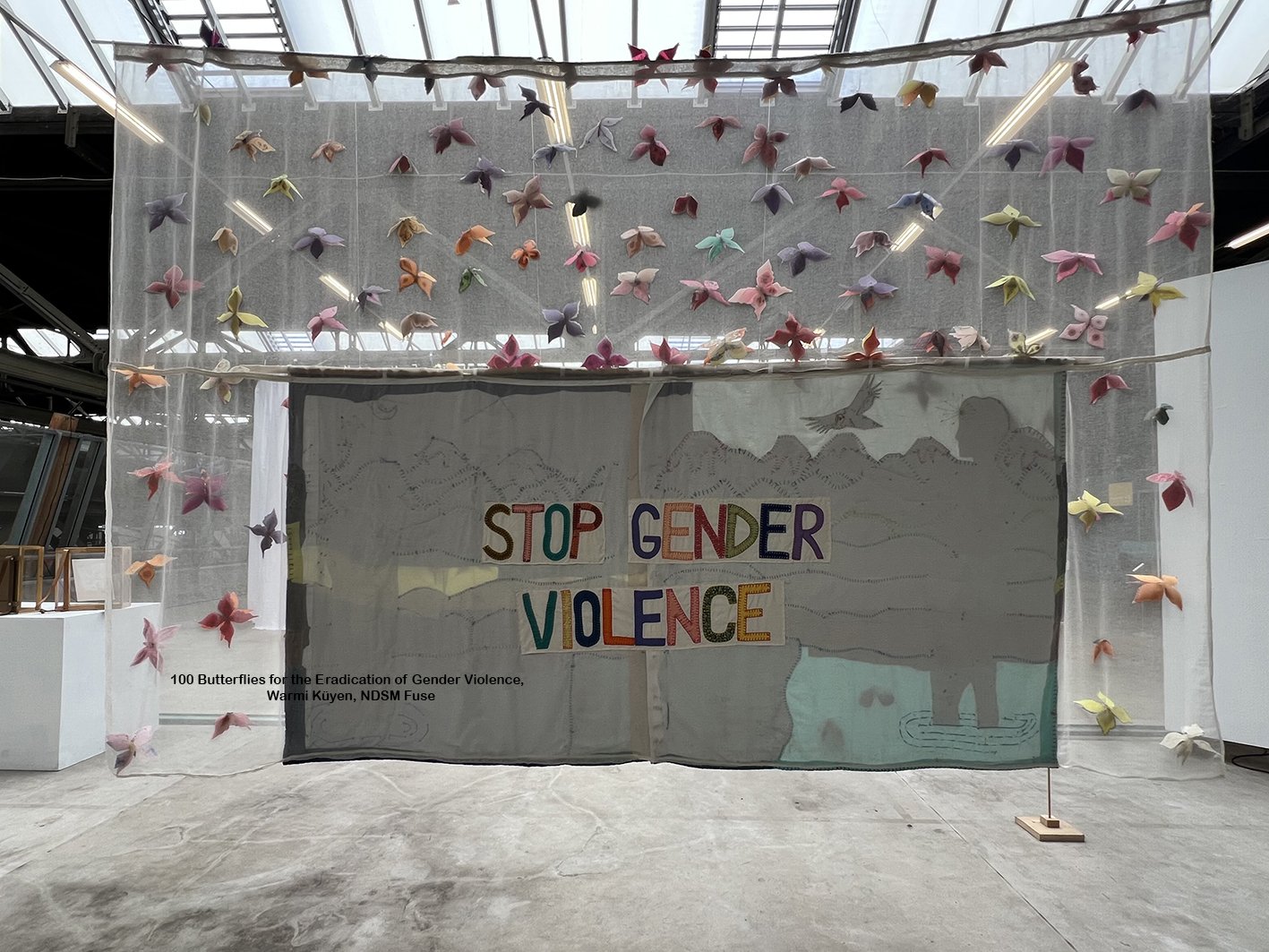
Beyond the immediate administrative uncertainty, the situation reveals a deeper structural fragility: the persistent gap between institutional discourse and material support for women artists and independent feminist initiatives. More than bureaucratic delay, the absence of response resonates as a form of erasure, interrupting processes of exchange, collaboration, and transnational visibility precisely at the moment they are meant to be activated.
The implications of this absence extend beyond the logistical. What is lost is not only the possibility of travel or participation, but the fragile ecosystem of collective artistic production that depends on sustained institutional commitment. Each deferred decision reverberates through networks of exchange, weakening the conditions under which non hegemonic artistic practices and discourses can circulate, be seen, and be supported across borders.
Remembering that visibility is not a symbolic outcome but a material condition that requires infrastructure, recognition, and official backing. Without it, the work of artists operating within collective and often under-resourced frameworks risks being confined, fragmented, or rendered invisible within global circuits of contemporary art.
-
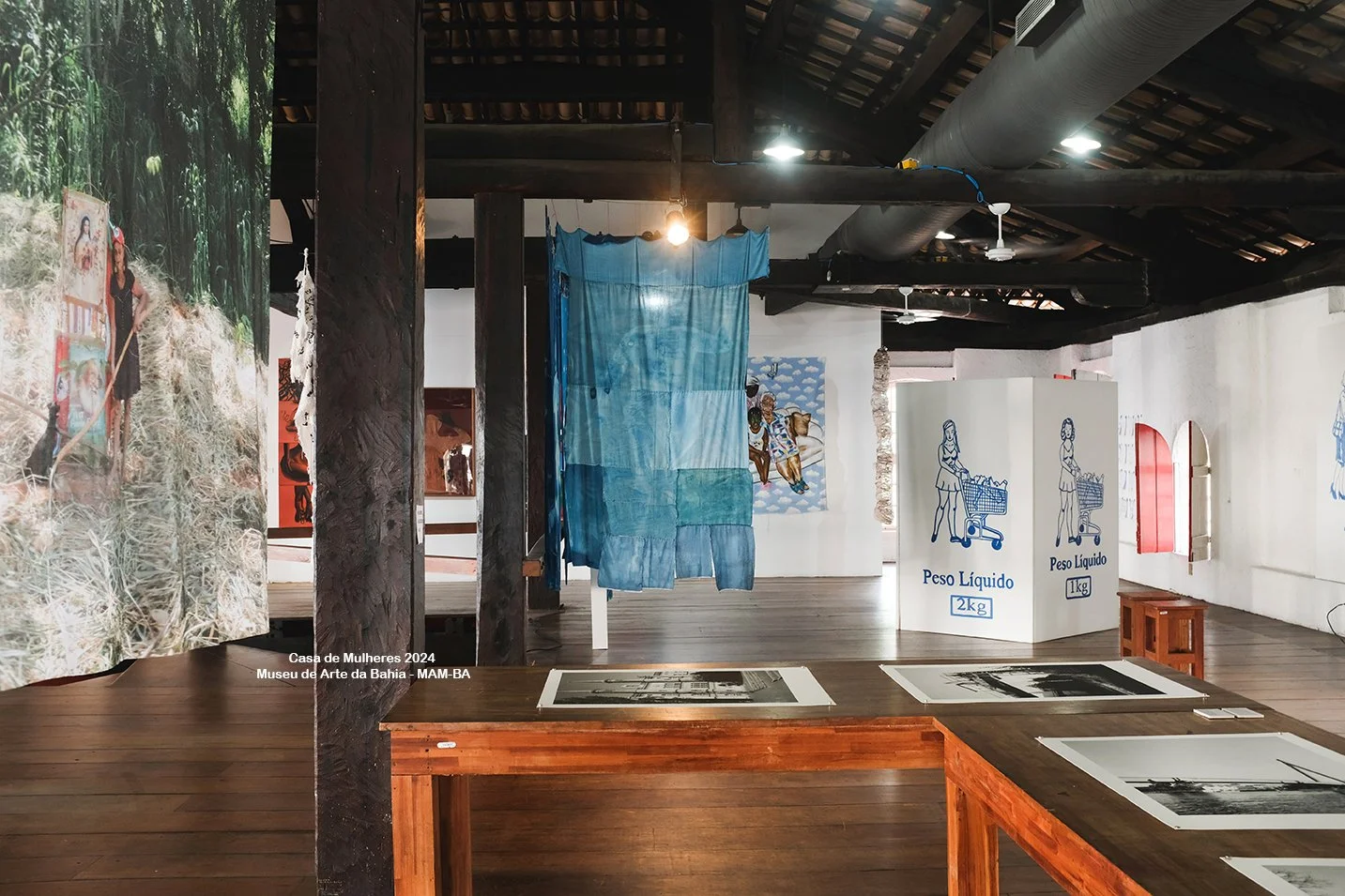
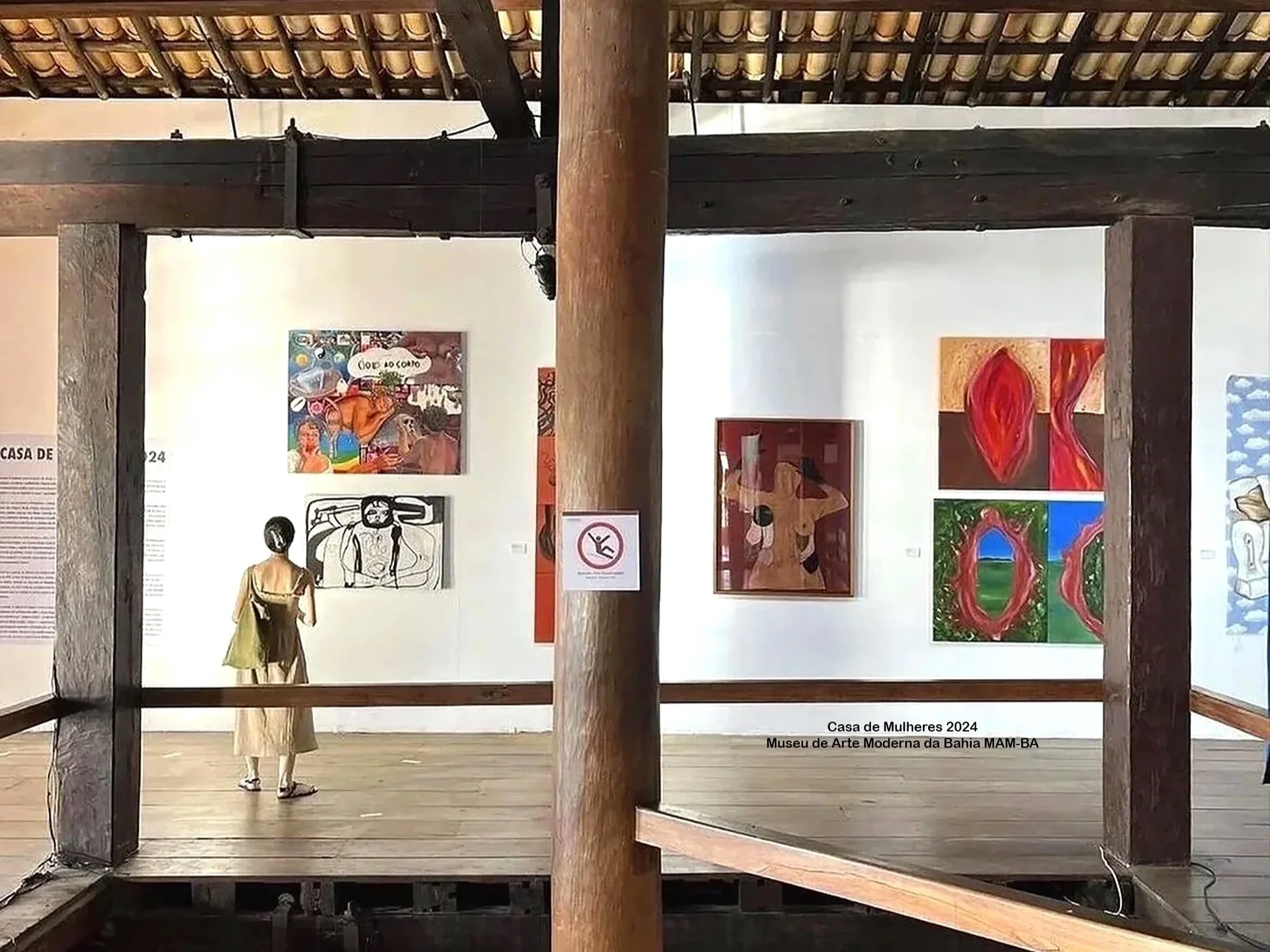
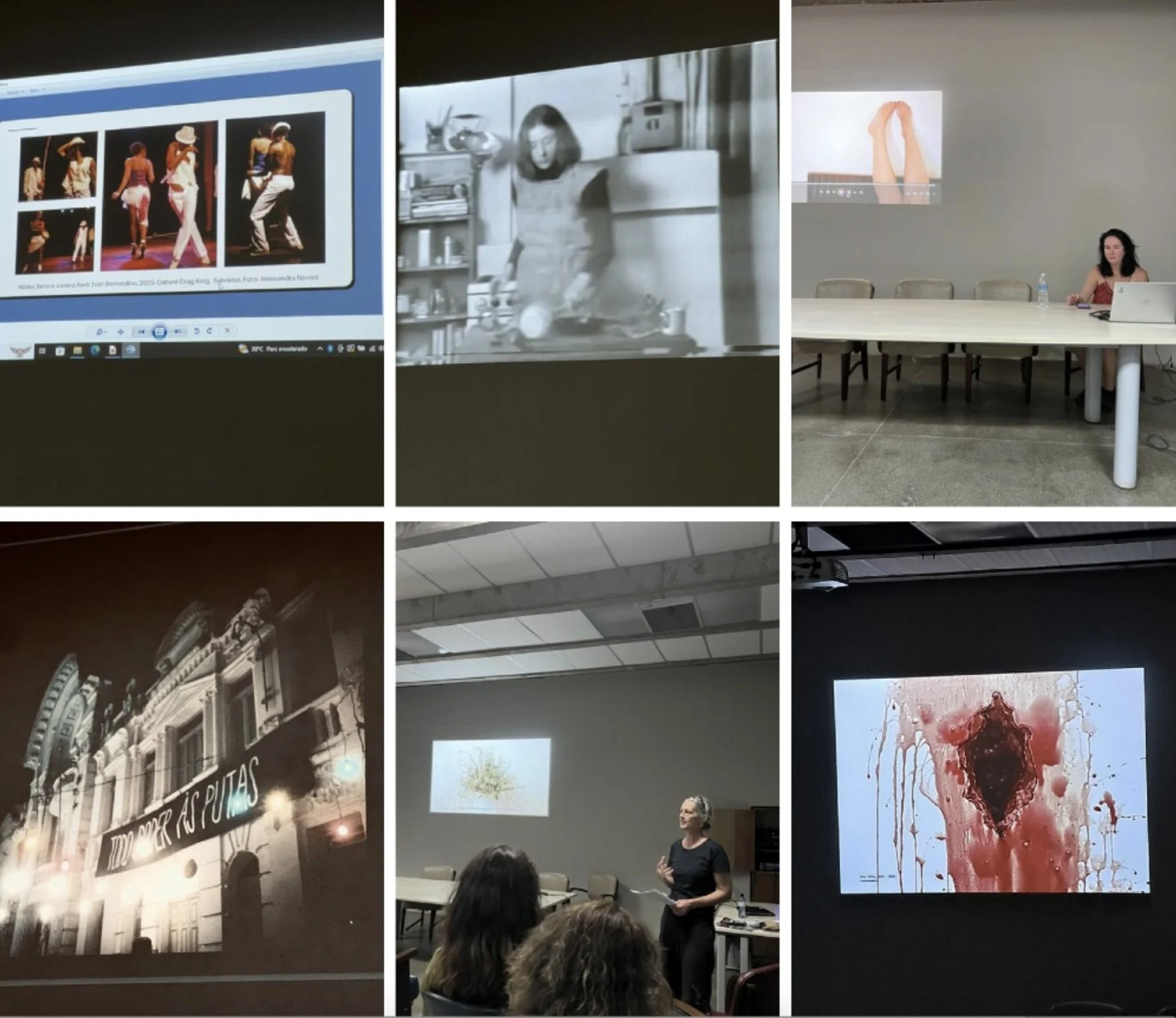
The first edition of the project combined the art exhibition Casa de Mulheres with the academic seminar Female Protagonisms in the Arts, Design and Architecture”. Aaimed to promote a space for debate fostering regional, national, and international dialogue, the seminar brought together artists, researchers, academics, students, managers, and professionals from creative fields particularly those engaged in Art, in order to critically address questions of representation, visibility, and women’s agency within these disciplines. By assembling works, research, and professional trajectories, the event sought to construct a critical panorama of the field, while expanding references and opening pathways toward new spaces of protagonism and power.
The production of contemporary visual culture owed much of its diversity, thematic depth, visual excellence, and subversive force to the contributions of women. As women intensified their presence in artistic and creative practices, new paradigms were established through the plurality of worlds, languages, and perspectives they introduced into the arts—an impact equally evident in architecture, photography, and design. Yet, despite significant advances in recent years, women remained scandalously underrepresented and underrecognized in the art world. This persisted even when their presence was often numerically or practically predominant in comparison to male authorship and action.
This contradiction became even more visible when considering the full artistic ecosystem: art educators, art historians, curators, critics, cultural managers, gallery professionals, and other agents whose work sustained the field. Within this expanded network, women’s protagonism was increasingly evident, yet it was not matched by equivalent recognition or by real structural power to transform institutions still deeply rooted in patriarchal foundations.
With the presentation of 29 academic works, the seminar positioned itself not only as a space of reflection but also as an urgent platform for critical engagement. It brought to light the persistent gender inequalities that continued to render the majority of women invisible, while simultaneously foregrounding their essential contributions across creative and intellectual practices. By doing so, it promoted a broad and necessary debate on the place of women in the arts, design, and architecture, while considering both the strategies and the institutional shifts required to confront and dismantle these enduring structural imbalances.
-
The late curator of this edition of the Venice Biennale made history as the first African woman to hold the role. A steadfast feminist, she devoted her career to amplifying the voices of women artists and cultural practitioners from the Global South, reshaping the contours of contemporary art with purpose and conviction.
Women House Amsterdam opened its doors in the immediate aftermath of her passing (May 2025), a moment marked by collective shock and grief. The loss reverberated deeply across communities of feminists and Global South art practitioners for whom she was a vital advocate and force of transformation.
At the exhibition’s entrance, a living memorial took shape: flowers, continuously renewed, stood as a gesture of mourning and remembrance, echoing the persistence of her vision.
Her passing is a loss of leadership, of courage, and of a voice that insisted on inclusivity, celebrated diversity, and restored a deeper sense of humanity to artistic practice. Her absence is immense!