
-
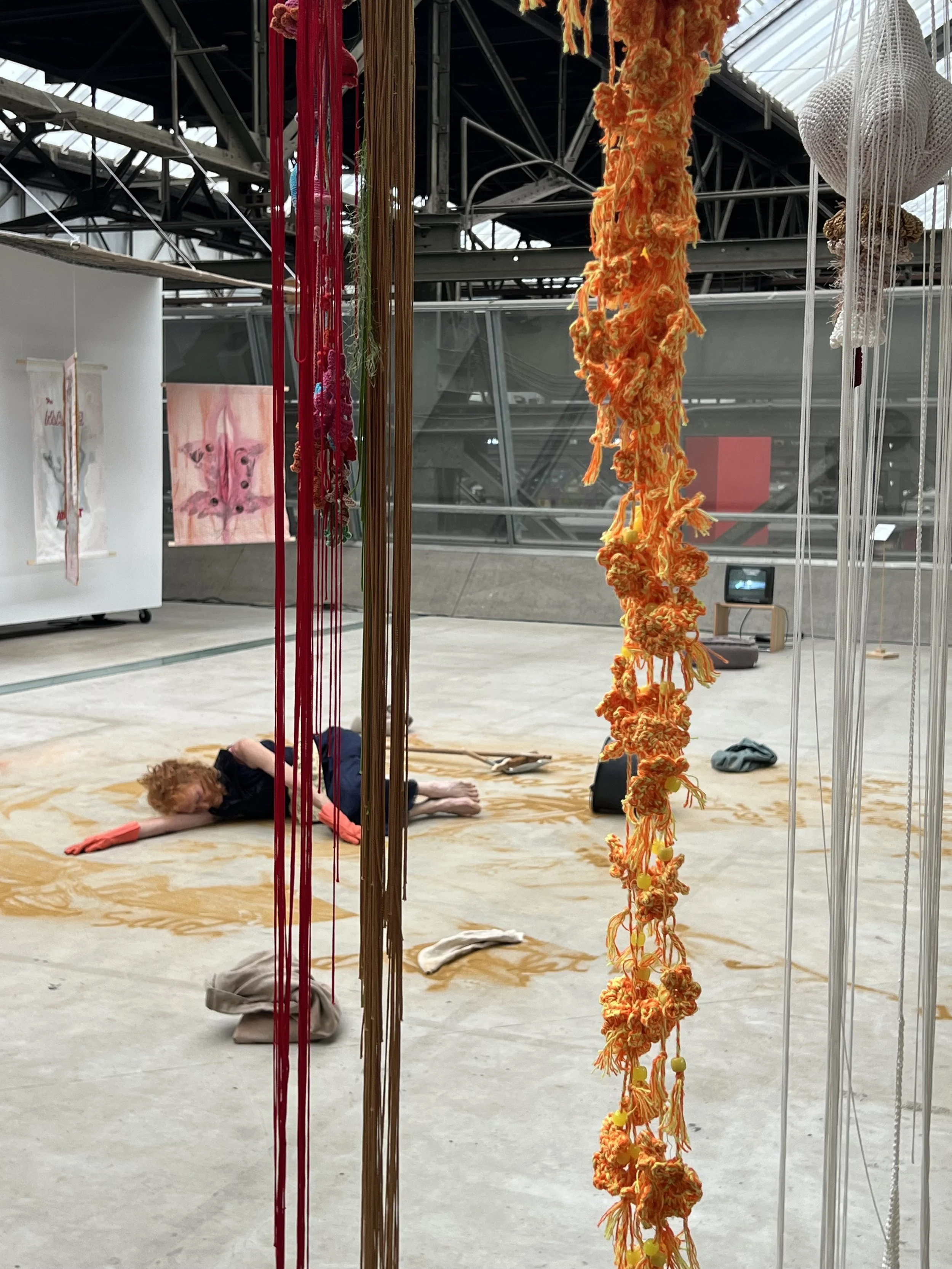
women house amsterdam
NDSM Fuse
Amsterdam, Netherlands
16 May - 07 July, 2025What does it mean to be a woman artist today? Which shared concerns and emerging questions shape the artistic research and production of women across the globe? And what challenges continue to affect the creative practices of women artists within diverse sociocultural and geopolitical contexts?
Drawing on these questions, the Women House project was initiated last year under the title Casa de Mulheres 2024, held at the Museum of Modern Art of Bahia (MAM-BA) in Salvador da Bahia, Brazil, featuring 51 artists. The initiative pays tribute to Womanhouse, the groundbreaking 1972 feminist art exhibition conceived by Judy Chicago and Miriam Schapiro in Los Angeles, widely regarded as the first major feminist art show in history, and seeks to interrogate the systemic inequalities that continue to shape the art world. The Amsterdam edition brings together the work of 25 women artists from 10 countries, whose practices reflect on the lived experiences of women across diverse realities.
Recognizing that the position of women in the arts cannot be separated from their broader status in society, their works challenge entrenched gender roles related to maternity, caregiving and domestic labor, while confronting persistent forms of violence, from symbolic erasure to femicide. They reclaim female and bodies long objectified, politicized, and controlled as powerful sites of resistance and narrative agency.
Yet more than 50 years after Womanhouse, has the status of women artists truly changed? Despite decades of resistance and critical engagement, and despite the strong presence of women across the artistic landscape, the art world continues to reproduce gendered exclusions and silences, remaining a white male-dominated field.
Changing this reality requires cultivating new and diverse forms of practice and power grounded in a political and philosophical feminist imagination that challenges hegemonic narratives and opens space for dialogue, disruption, and transformation. This vision is rooted in intersectional voices capable of imagining an egalitarian future shaped by the decolonization of institutions, climate justice, transnational solidarity, and a radical commitment to peace on a global scale.
Therefore, the Woman House project stands as a visionary act—one among a growing constellation of powerful initiatives around the world that are not only raising awareness and creating space for women artists, but also imagining a more inclusive and equitable future for all.
_Neyde Lantyer & Alejandra Muñoz, Amsterdam 16 May 2025 [curatorial statement]
-
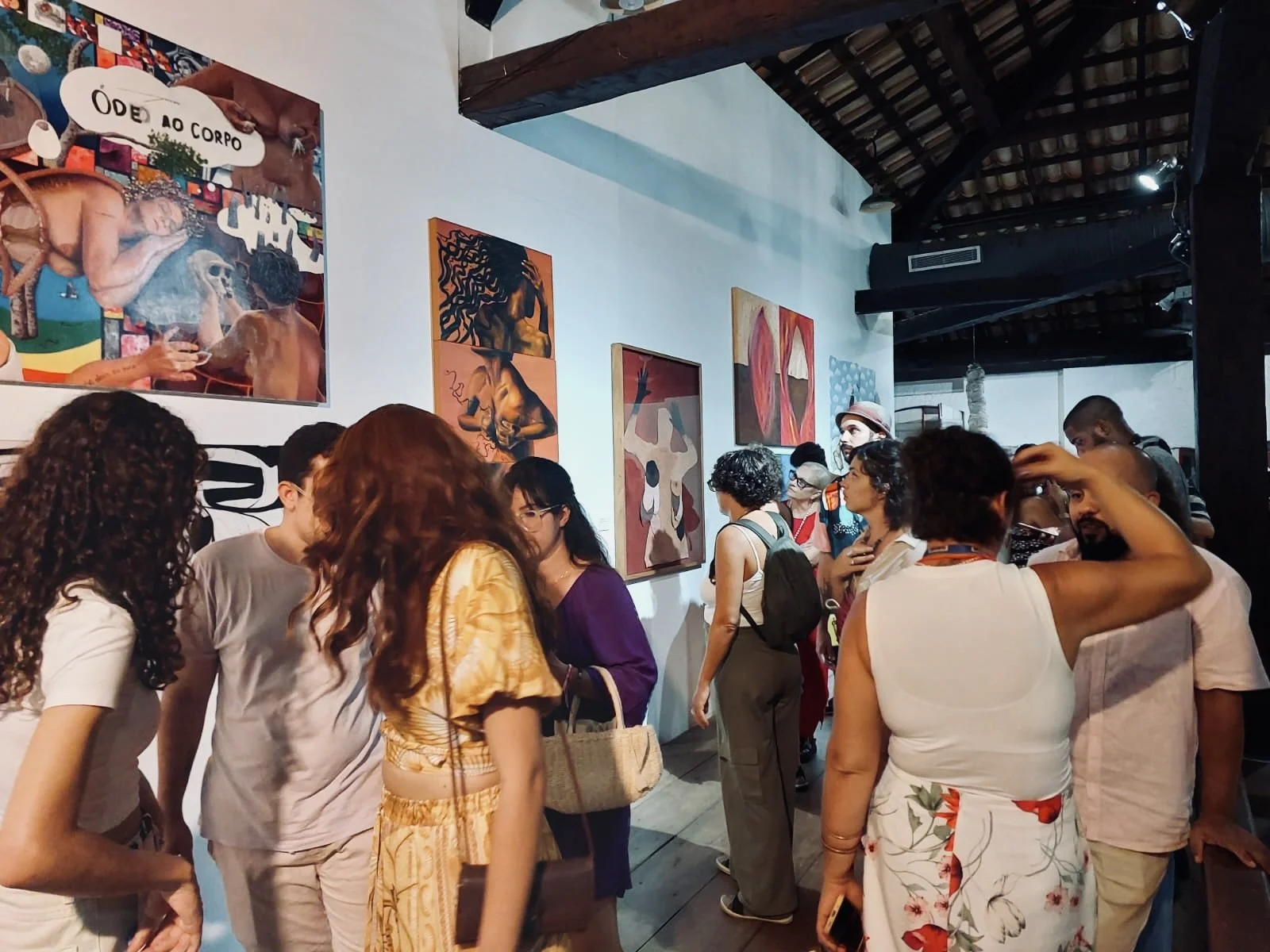
casa de mulheres 2024
Museu de Arte Moderna da Bahia, MAM-BA
Salvador-Ba, Brazil
24 Jan - 31 Mar, 2024Casa de Mulheres 2024 articulated a mosaic of languages to question the position of women in society, a theme that remains far from outdated. The exhibition is part of a broader contemporary debate led by women from an intersectional perspective, considering the social markers of race and class and their intersections with gender, while simultaneously amplifying actions for equal space and representation in the world of arts.
The title pays homage to Womanhouse, the first feminist exhibition in history, held 52 years ago, in 1972, in Los Angeles, United States, by artists Judy Chicago and Miriam Schapiro, as part of the Feminist Art Program at the California Institute of the Arts (CalArts), the first gender studies program in history, also created by Chicago. Conceived as a site-specific installation and performance space, Womanhouse questioned domestic labor and the clichés of women that had been naturalized for centuries, presenting artists performing everyday female tasks such as cleaning floors, washing dishes, and ironing, making history by transforming female experience into art and subversion.
History did not stand still during the 1960s and 1970s, a period of major international insurgencies that shook the established order and provoked profound paradigm shifts across society. Triggered by independence movements in the so-called Third World, initiated by the Cuban Revolution, and followed by the uprising of the American Black movement (the Civil Rights Movement), as well as youth protests against the Vietnam War and May 1968, which paralyzed Europe, the movements that constituted the Counterculture reached all continents and also spread to Brazil, where they were represented in the arts by “marginal artists” and Tropicália. In this context, the second wave of feminism emerged, and the women’s movement against oppression and for female empowerment took to the streets.
If, in the past, women were denied access to education and artistic practice, in the 20th century they quickly became the majority in art academies. However, this growth did not reflect the profound gender inequality that persists in the art world in general. The emergence of feminist artists, also known as “radical women,” in the late 1960s intensified the questioning of women’s place in the arts. Yet, despite the visibility achieved in recent decades, the space and recognition granted to women’s practices and legacies remain precarious and often discredited, in stark contrast to the power and privilege largely maintained by men.
The contemporary debate on the profoundly unequal position occupied by female artists has become increasingly expansive. By bringing to light submerged and hidden issues, as well as the contradictions between the significant presence of women and their persistent lack of institutional power in the arts, the Women’s House 2024 project situates itself firmly within this ongoing critical discourse.
_Neyde Lantyer & Alejandra Muñoz, Salvador, 24 Jan 2024 [curatorial statement]